
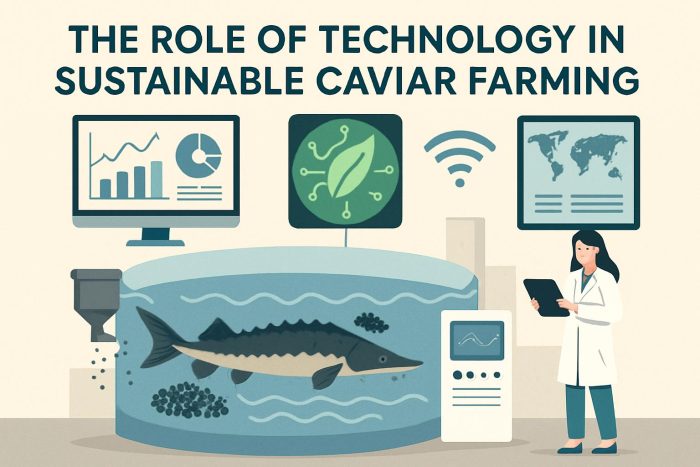
The Intersection of Technology and Sustainable Caviar Farming
The demand for caviar, historically a luxury delicacy, has led to overfishing of sturgeon in the wild. As a result, sustainable caviar farming has become an essential practice to preserve natural populations and meet global market demands. Recent advancements in technology have significantly transformed these farming practices.
Impact of Technology on Hatchery Operations
One of the most crucial phases in caviar production is managing hatcheries efficiently. Innovative technologies are now employed to monitor and control water conditions, essential for sturgeon health. These systems encompass advanced sensors to track oxygen levels, temperature, and pH balance. Furthermore, automated feeding systems administer precise amounts of food, minimizing waste and ensuring optimal growth conditions.
Genetic Research for Sustainable Farming
Utilizing genomic technologies has enabled scientists to identify and cultivate sturgeon species that are more resilient and productive. Through genetic mapping, farmers select breeds with traits that ensure faster growth rates and higher caviar yields. This approach not only enhances productivity but also helps maintain biodiversity.
Water Recirculation and Waste Management
The integration of recirculating aquaculture systems (RAS) in caviar farming reflects a significant technological advancement. These systems allow farms to reuse up to 99% of their water by employing biological and mechanical filtration processes. Effective waste management reduces environmental footprint, decreases pollution, and supports sustainability goals. Farms can run independently of natural water bodies, mitigating ecological disruptions.
Blockchain for Traceability and Transparency
An emerging trend in sustainable agriculture is the use of blockchain technology to enhance transparency across the supply chain. By adopting blockchain, caviar producers offer traceability that ensures authentication of product origins. It builds consumer trust while helping in regulatory compliance. Blockchain also optimizes logistics and reduces fraudulent activities in the industry.
Conclusion
As the industry strives towards sustainability, technology stands at the forefront of innovation in caviar farming. From water quality management to genetic research and supply chain transparency, these advancements are critical in addressing environmental concerns and ensuring the viability of caviar production for future generations. These technological innovations illustrate a significant shift towards sustainable practices that respect both ecological and economic dynamics.
