
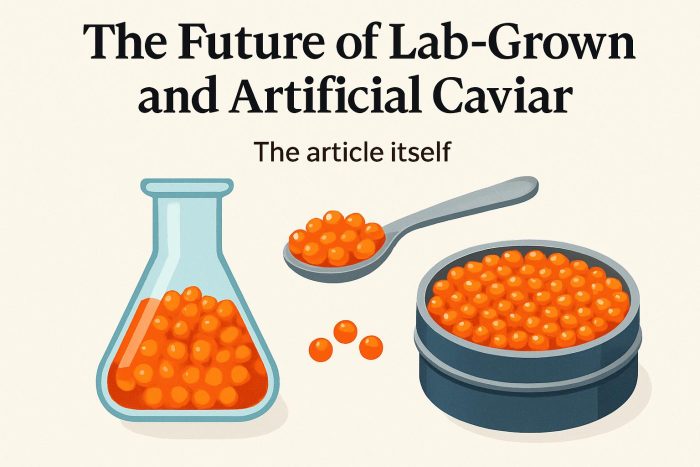
The Rise of Lab-Grown and Artificial Caviar
In recent years, the demand for sustainable and ethical food sources has led to significant interest in lab-grown and artificial caviar. Traditional caviar, sourced from sturgeon fish, often involves practices that raise concerns about environmental impact and animal rights. This has prompted scientists and culinary innovators to explore alternative methods for producing this coveted delicacy.
Understanding Lab-Grown Caviar
Lab-grown caviar refers to caviar produced through cellular agriculture. Scientists cultivate fish roe by extracting cells from sturgeon and allowing them to replicate under controlled conditions. This process eliminates the need to harm fish, offering a humane alternative to traditional methods.
One of the primary advantages of lab-grown caviar is its potential to address the overfishing of sturgeon, which has been a significant issue for decades. Overfishing has led to a dramatic decline in sturgeon populations, prompting regulations and restrictions on caviar production. By reducing the demand for wild-caught sturgeon, lab-grown options present a sustainable solution.
Advancements in Artificial Caviar
Artificial caviar, on the other hand, is created using plant-based or synthetic ingredients. These alternatives aim to replicate the taste, texture, and appearance of traditional caviar without using any animal-derived materials. The production of artificial caviar involves the use of techniques such as spherification, which creates small, bead-like structures that mimic fish roe.
One of the pioneering efforts in artificial caviar involves the use of alginate, a substance derived from seaweed. Alginate enables the formation of spheres that closely resemble the texture of caviar. Companies are also experimenting with flavors by incorporating extracts from fish and seafood to enhance the taste profile of artificial caviar.
Environmental and Economic Impact
The shift towards lab-grown and artificial caviar has potential implications for both the environment and the economy. By reducing reliance on wild sturgeon populations, these technologies contribute to the preservation of marine ecosystems. Moreover, as production methods advance and scale, it is expected that the cost of lab-grown and artificial caviar will decrease, making it more accessible to consumers.
Additionally, the reduced environmental footprint of these alternatives aligns with growing consumer preferences for sustainable foods. As awareness of environmental issues continues to rise, consumers are increasingly seeking products that align with their values of ethical and sustainable consumption.
Challenges and Considerations
Despite its promise, the development of lab-grown and artificial caviar is not without challenges. For lab-grown caviar, technical difficulties in scaling production remain a primary concern. Ensuring that the product closely resembles traditional caviar in taste and quality is another hurdle that scientists must overcome.
Similarly, artificial caviar must ensure a convincing replication of the sensory experience provided by real caviar. Flavor, texture, and appearance are fundamental factors that determine consumer acceptance and success in the market.
Furthermore, regulatory considerations play a crucial role in the commercialization of these products. As with any new food technology, safety assessments and clear labeling are essential to gaining consumer trust and acceptance.
The Future Outlook
The future of lab-grown and artificial caviar holds significant promise. Innovations in food technology and increased investment in sustainable alternatives are likely to drive improvements in production processes. As these products become more refined and economically viable, they could revolutionize the caviar market.
Ultimately, the success of lab-grown and artificial caviar will depend on their ability to meet consumer expectations while addressing pressing environmental and ethical concerns. As research progresses, it is plausible to envision a future where traditionally sourced caviar becomes a rarity, with lab-grown and artificial alternatives taking center stage in the world of gourmet cuisine.
