
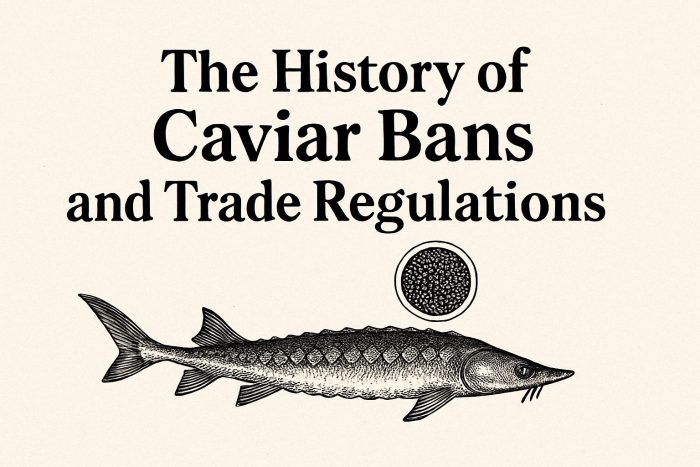
The Origins of Caviar and Its Early Trade
Caviar, a delicacy comprising salt-cured roe from sturgeon, has been a luxury item for centuries. Historically, the Caspian Sea, rich in sturgeon species such as the Beluga, Sevruga, and Osetra, has been the primary source of this coveted product. In the 19th and early 20th centuries, the abundance of sturgeon meant that caviar was not only consumed by the aristocracy but also available to the general public in regions like Russia and Persia.
Conservation Efforts and Early Bans
By the mid-20th century, increased demand and overfishing began to threaten sturgeon populations. Recognizing the potential for extinction, several countries initiated conservation programs. In the 1970s, the Soviet Union, a major caviar exporter, imposed the first significant restrictions on sturgeon harvesting to counteract declining populations.
International Trade Regulations
Global awareness of the plight of the sturgeon grew, leading to international discussions on how to regulate caviar trade and protect these fish. In 1998, sturgeon and paddlefish were listed under the Convention on International Trade in Endangered Species of Wild Fauna and Flora (CITES), a treaty aimed at ensuring that international trade in specimens of wild animals does not threaten their survival. This listing required that all international caviar trade adhere to CITES regulations, including permits and quotas for exporting countries.
Imposition of Caviar Bans
The turn of the 21st century saw more stringent measures. In 2006, the United States Fish and Wildlife Service imposed a significant ban on importing beluga caviar from the Caspian Sea basin to safeguard the species from exploitation. This action, followed by similar bans and restrictions in Europe, underscored the urgent need for sustainable caviar harvesting practices.
Recent Developments and Sustainable Practices
In the past decade, the drive for sustainable caviar production has resulted in aquaculture’s rise. Farms in the US, China, and Europe have become reputable sources of caviar, producing without endangering wild sturgeon populations. These efforts have been boosted by technological advancements in breeding and roe extraction.
While bans and trade regulations were initially seen as constraints on the caviar industry, they have successfully shifted the market towards more responsible practices. Ongoing international cooperation remains crucial to ensure the future of both sturgeon species and the luxury caviar trade.
