
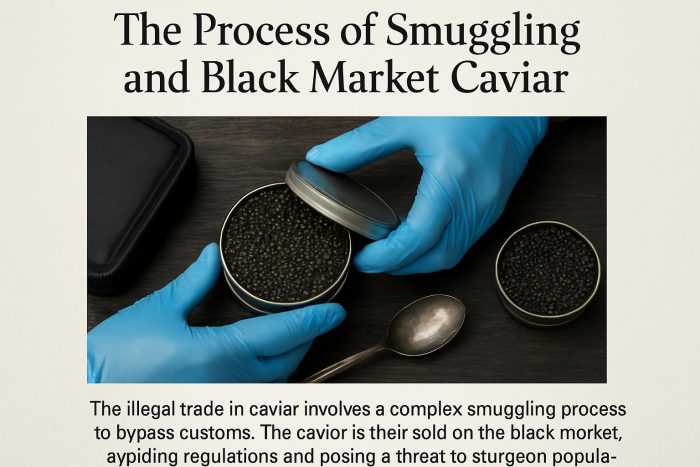
The Intricacies of Caviar Smuggling
The global black market for caviar is a complex network driven by high demand and the luxurious status of this delicacy. Caviar, the salted roe of sturgeon, is prized for its flavor and status. However, due to overfishing and the endangered status of many sturgeon species, the trade is strictly regulated. Despite these regulations, a black market thrives.
The Supply Chain
Caviar smuggling involves several steps, beginning with the poaching of sturgeon in regions like the Caspian Sea. Here, illegal fishing operations extract the roe from these endangered species. The poachers often operate under the cover of night or in remote areas to evade law enforcement. Once harvested, the caviar is processed under unsanitary conditions, compromising both health and quality.
After processing, the caviar is transported clandestinely across borders. Smugglers employ various methods to hide the product, such as concealing it in legitimate shipments or using bribery. These operations often exploit corrupt officials, making it difficult for authorities to intercept shipments.
Black Market Dynamics
The black market caviar trade is sustained by both supply and demand. The illegal product is often sold at a fraction of the price of their legal counterparts, which attracts price-sensitive consumers. Moreover, luxury restaurants and high-end food retailers sometimes participate, drawn by the allure of offering ‘rare’ caviar to their clientele.
The demand for caviar in countries where regulations are lax further drives the black market. In some regions, legal caviar is not available, creating a vacuum that smugglers are willing to fill. Meanwhile, organized crime groups have taken a keen interest in caviar smuggling due to its lucrative nature. They often use their established networks for drug trafficking to facilitate the caviar trade.
Challenges in Regulation
Law enforcement faces numerous challenges in combating caviar smuggling. Efforts to thwart this black market include international cooperation and stricter enforcement of existing regulations. However, enforcement agencies are often under-resourced and unable to monitor vast areas where poaching occurs.
Technological advancements, such as DNA testing, are being employed to accurately identify species and trace the origins of seized caviar. Such methods aim to prevent the sale of illegal products by ensuring that only legally-sourced caviar reaches the market.
Sustainable Solutions
One approach to mitigate the black market is the promotion of aquaculture, where caviar is farmed ethically and sustainably. This not only helps protect wild sturgeon populations but also provides a legal source of caviar for the market. Supporting sustainable sources can also diminish the demand for black market products.
Public awareness and education about the impact of illegal caviar trade on endangered species also play a crucial role. Consumers must be encouraged to support only sustainable and legally-sourced products. By making informed choices, consumers can significantly impact the reduction of the black market.
The international community must continue efforts to tighten regulations and ensure they are effectively enforced to dismantle the clandestine trade and safeguard endangered sturgeon species. For more information on sustainable caviar practices, explore resources on sustainable caviar.
