
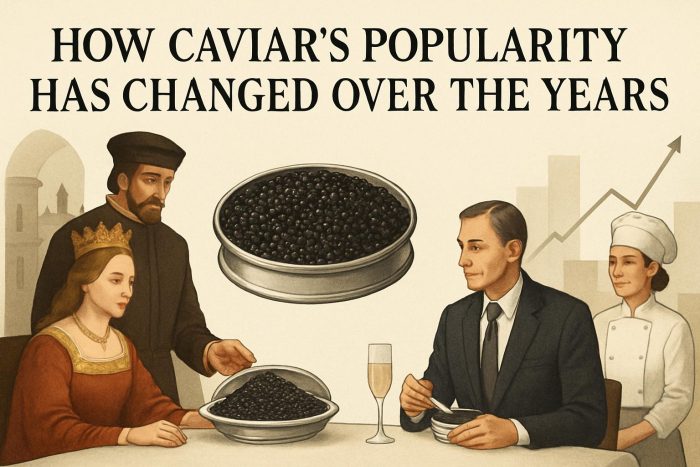
The Historical Status of Caviar
Caviar, considered one of the world’s most luxurious delicacies, has had a fascinating journey throughout history. Originally, it was the exclusive domain of Russian aristocracy and European royalty. Its status as a symbol of wealth and sophistication is well-documented in historical texts.
Early Days to Mid-20th Century
In the early days, sturgeon was abundant in the Caspian Sea region, and its roe was harvested by the native fishermen. As caviar became synonymous with luxury, it found its way to the tables of emperors and czars. During the 19th century, the popularity of caviar expanded across Europe, leading to its establishment as a luxury item by the early 20th century.
Post-World War II Developments
After World War II, the demand for caviar saw a significant increase, especially in the United States. This was partly due to the economic boom and the rise in travel, which exposed many Americans to this exotic delicacy. The 1960s marked the beginning of a broader appreciation for caviar, as it became a staple in fine dining restaurants and luxury events.
The Decline Due to Overfishing
By the late 20th century, the surge in demand led to overfishing, particularly in the Caspian Sea. This overexploitation caused a drastic decline in sturgeon populations, leading to increased regulation and a rise in prices. Consequently, caviar became even more of a luxury item, further reinforcing its status as a high-end product.
Recent Trends and Modern Popularity
Despite environmental challenges, the modern market for caviar continues to thrive. The introduction of aquaculture has played a crucial role in sustaining the industry, allowing for the cultivation of sturgeon in farms across the globe. This method of production has helped stabilize prices and ensure a more sustainable supply.
In recent years, the appeal of caviar has broadened beyond traditional luxury markets. Chefs and food enthusiasts are increasingly incorporating caviar into a variety of dishes, experimenting with its use in both gourmet and casual settings. This shift has contributed to a modest increase in its accessibility, albeit still maintaining its exclusive image.
Conclusion
Caviar’s journey from the royal courts of Europe to modern dining establishments illustrates its enduring allure and adaptability. While it remains a symbol of opulence, developments in farming and production methods have allowed it to reach a more diverse audience. For more information on sustainable caviar farming initiatives, visit this resource.
