
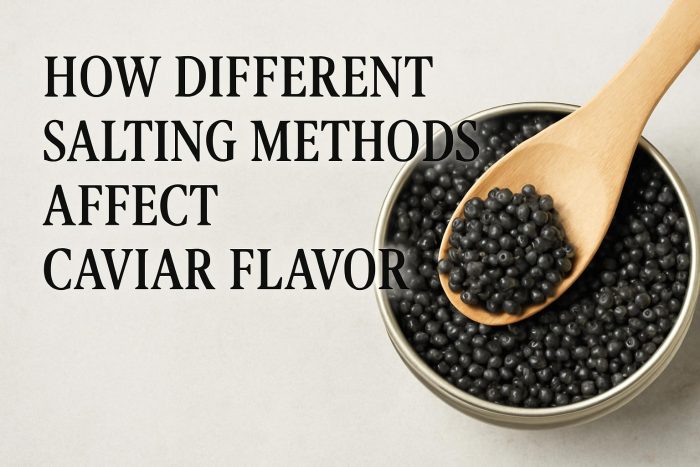
Introduction to Caviar Salting Methods
Caviar, the prized delicacy consisting of sturgeon fish eggs, owes much of its taste profile to the salting methods used in its preparation. The salting process is a critical step that not only acts as a preservative but also amplifies the intrinsic flavors of the roe. Various salting techniques can influence the flavor, texture, and quality of the final product, creating a range of caviar experiences.
Malossol: The Lightly Salted Approach
The term Malossol is derived from the Russian word meaning “little salt.” This technique uses minimal salting, typically less than 5% by weight, allowing the natural taste of the sturgeon roe to shine through. Caviars prepared using the Malossol method are noted for their delicate flavor and texture. Their freshness and subtle taste make them a favorite among connoisseurs who prefer a more natural flavor profile.
Pressed Caviar: Intensity in Flavor
Pressed caviar represents a more intense experience in terms of both flavor and texture. This technique involves salting the eggs more heavily, then pressing them into a dense paste. The result is a robust, concentrated flavor that is usually more suitable for those who enjoy a powerful taste. Pressed caviar can often be combined with prepared dishes, contributing a rich, umami character.
Semi-Preserved: Balancing Salt and Flavor
Semi-preserved caviar maintains a balance by utilizing a middle-ground amount of salt, typically around 6-8%. This method provides an extended shelf life without overwhelming the caviar’s inherent flavors. The harmonious blend of preservation and flavor retention makes semi-preserved caviar a versatile choice for various culinary applications.
Impact on Texture
The choice of salting method significantly affects the texture of caviar. Lightly salted caviars retain a firmer, more delicate bead, creating a pop in the mouth that is highly sought after. In contrast, heavier salting or pressing can produce a softer texture with a more buttery mouthfeel. Understanding these textural differences is essential for anyone seeking to purchase or enjoy caviar.
Conclusion
Salting is not just a preservation technique but a pivotal element that shapes the overall sensory experience of caviar. Each method imparts distinct characteristics, from the nuanced flavors of Malossol to the bolder notes of pressed caviar. If you’re interested in learning more about caviar production, you can explore resources by Caviar Academy or visit other dedicated culinary sites. Regardless of preference, understanding these techniques enriches the appreciation of one of the world’s most luxurious foods.
