
The Earliest Records of Caviar
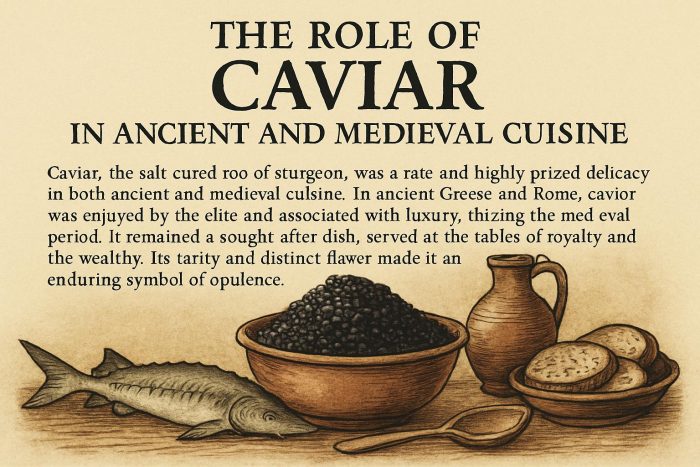
The history of caviar as a delicacy traces back many centuries, particularly within the cuisines of ancient civilizations. The earliest known mentions of caviar date back to the Greeks and Persians, who developed a taste for the eggs of sturgeon fish. The Persian term “khavyar” is believed to have given rise to the English word “caviar.” Ancient Persians not only consumed caviar for its rich flavor but also valued it for purported medicinal properties.
Caviar in Ancient Greek and Roman Cuisine
The Greeks, followed by the Romans, were early adopters of caviar, incorporating it into their lavish banquets and feasts. For the Greeks, who had well-established trade routes, caviar was a symbol of luxury and sophistication. Greek poet and playwright Aristophanes mentioned caviar in his play *The Acharnanians*, highlighting its popularity among the elites of the time.
Romans, known for their extravagant feasts, took a liking to caviar as well. They typically served it as part of elaborate dining experiences, surrounded by a variety of exotic and indulgent foods. Romans referred to various types of fish roe, including caviar, as cetaria, emphasizing how integral it was to their dining culture.
Caviar in Byzantine and Medieval Europe
Byzantium, a successor of the Roman Empire, continued the tradition of savoring caviar. The Byzantine Empire, with its strategic location and access to the Black Sea, became a crucial hub for caviar trade. This gave rise to a significant appreciation for caviar within Byzantine culinary practices.
By the Middle Ages, caviar had made its way into Northern European cuisine, albeit more slowly due to transportation challenges. Nonetheless, it gained popularity among the region’s nobility. English, French, and Russian elites began to favor caviar, seeing it as a status symbol and adding it to their gourmet selections.
The Medicinal Beliefs Surrounding Caviar
Throughout ancient and medieval times, caviar was believed to possess numerous health benefits. It was thought to enhance vitality and strength, which contributed to its esteemed status beyond just its taste. Some ancient cultures also believed that caviar could remedy liver diseases and improve eyesight. Such beliefs added to its allure, making it a sought-after food for those who could afford it.
The Legacy of Caviar
The historical significance of caviar has evolved over time, leaving a lasting impact on culinary traditions worldwide. Its long-standing association with luxury and sophistication stems from its origins in ancient and medieval culinary practices. While modern production methods and consumption patterns have changed, the perception of caviar as a delicacy endures.
For more information on culinary history and the role of unique ingredients in shaping global cuisine, exploring dedicated historical and culinary resources can offer valuable insights into these fascinating topics.
