
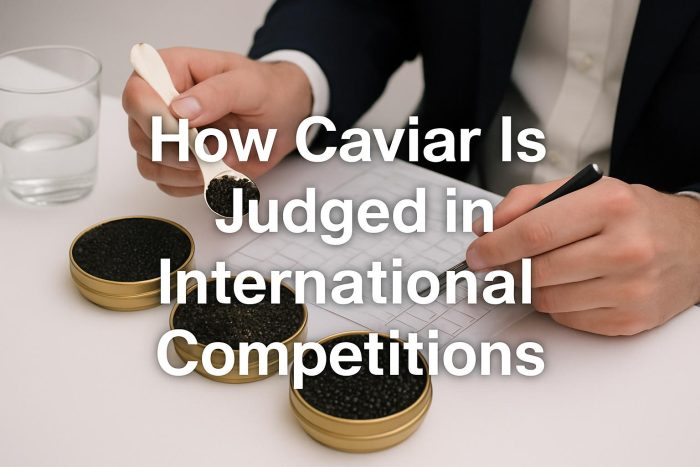
Introduction to Caviar
Caviar, a luxury delicacy consisting of salt-cured fish eggs, typically comes from sturgeon varieties, with beluga, osetra, and sevruga being the most sought after. Due to its status and demand, international competitions are held to judge its quality and uniqueness. These events provide insights into the standards caviar producers must meet globally.
Judging Criteria
When judging caviar in international competitions, several aspects are considered to ensure comprehensive evaluation. The criteria used are rooted in traditional assessments while adapting to innovative advancements in caviar production.
Appearance and Color
The first factor examined is the visual appeal of the caviar. Judges look at the size, uniformity, and color of the eggs. High-quality caviar should be composed of fine eggs that are consistent in size and have a glossy sheen. The color varies depending on the type of caviar, with shades ranging from pale silver-gray to deep black. Each species of sturgeon yields a unique color palette, which is crucial for the assessment.
Texture
Texture plays a significant role in caviar evaluation. The eggs should be firm and intact, with each bead popping delicately on the palate without being too hard or too soft. Texture contributes to the overall mouthfeel, which is highly valued in premium caviar.
Taste and Flavor
The flavor profile of caviar is perhaps the most critical element of judgment. High-quality caviar should have a balanced taste that combines a buttery richness with a hint of sea or brine without being overly salty. The complexity of the flavor, including its depth and subtleness, reflects the skill of the producer and the quality of the environment in which the sturgeon were raised.
Aroma
Caviar’s aroma is an often-overlooked but essential aspect of judging. It should have a fresh, clean scent reminiscent of the ocean, with no overpowering fishy smell that would indicate spoilage or poor quality.
Categories of Competition
Caviar competitions are diverse, often categorized by the type of sturgeon or method of production, such as farmed versus wild. Within these categories, experts focus on identifying innovation in sustainable practices and distinctive taste profiles developed by different producers around the world.
Traditional vs. Modern Methods
Judges often differentiate between caviar produced using traditional methods and those leveraging modern techniques. Traditional methods might emphasize centuries-old practices, while modern methods could incorporate advanced breeding and environmental techniques. Both approaches are respected but assessed on their adherence to quality standards and innovative contributions to the caviar industry.
Global Impact and Market Trends
The role of international caviar competitions extends beyond mere judgment; these events significantly influence market trends and consumer preferences. Winning a prestigious competition can enhance the reputation of a caviar producer, opening new markets and increasing demand. The competitions also foster global discussions about sustainable caviar production, which is critical in light of declining wild sturgeon populations.
For more information on sustainable caviar practices, please visit this source.
Conclusion
International caviar competitions critically assess various aspects of caviar, from appearance to flavor, and influence market dynamics globally. Understanding these criteria helps both producers and consumers appreciate the complexities involved in creating this luxurious delicacy.
