
The Origins of Caviar
Caviar, the delicacy made from sturgeon roe, has a rich history that dates back to ancient times. Early records suggest that the Persians were among the first to consume and appreciate the unique taste of sturgeon eggs. They believed it had medicinal properties and consumed it for strength and nourishment. The tradition gradually spread to the Greeks and the Romans, who also recognized its value.
European Adoption and Aristocratic Status
Caviar’s journey to Europe transformed it into a luxury item that became synonymous with wealth and sophistication. By the Middle Ages, it had become a staple on the tables of Russian czars and European nobility. The introduction of caviar to Western Europe is often attributed to Russian traders, who popularized the delicacy among Europe’s elite. This trend was further cemented in the 19th century, when it became a fixture at lavish banquets and royal gatherings.
Traditional Serving Practices
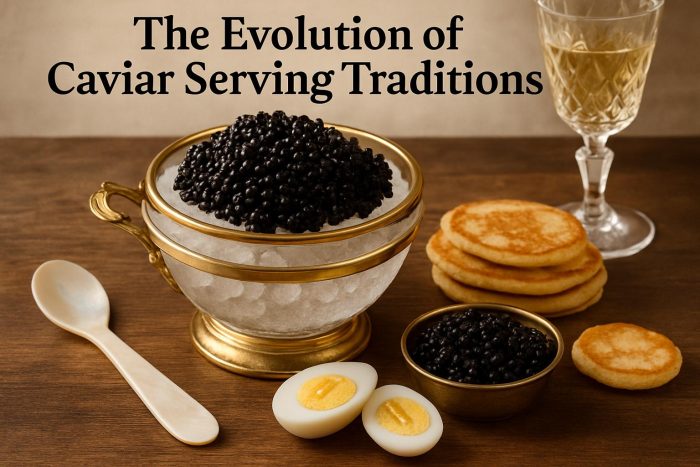
In its early days, caviar was served in its most authentic form—fresh and unadorned. It was traditionally served on ice to maintain its delicate flavor and texture. Interestingly, the serving method remained consistent for centuries, focusing on enhancing and preserving the caviar’s natural taste. Traditionally, caviar is served with a non-metallic spoon, often made of mother-of-pearl, horn, or bone. Metal utensils are avoided because they can impart an undesirable metallic taste to the caviar.
Modern Serving Trends
While traditional serving methods have stood the test of time, modern influences have introduced new trends in caviar presentation. Today’s culinary landscape is marked by creative experimentation and diverse serving styles. Restaurants and chefs around the world have embraced innovative techniques to showcase caviar as part of gourmet dishes. From caviar-topped blinis to intricate sushi rolls, caviar’s role in cuisine has expanded well beyond its classical roots.
Caviar in Contemporary Cuisine
In recent years, caviar has found a place in contemporary cuisine as a versatile ingredient that adds a touch of luxury to a variety of dishes. Chefs are incorporating caviar into unique recipes that blend traditional flavors with modern flair. This evolution is reflective of a broader trend in the culinary world, where classic ingredients are reimagined to appeal to evolving palates.
For further insights into the world of caviar and its culinary applications, consider exploring more specialized resources on gourmet food practices. These sources can provide a deeper understanding of how caviar continues to evolve in the ever-changing landscape of modern dining.
