
Introduction to Caviar
Caviar, the prized delicacy consisting of salt-cured fish eggs, is synonymous with luxury and culinary sophistication. While it has been traditionally associated with the Caspian Sea, the 21st century has seen an expansion of caviar production to various parts of the world. These emerging regions have introduced new flavors and increased the availability of this once-exotic product.
The Rise of Sustainable Aquaculture
In the face of overfishing and environmental concerns, sustainable aquaculture has gained importance in caviar production. Modern methods focus on creating eco-friendly environments for sturgeon farming. As a result, several regions have excelled in producing high-quality caviar while maintaining ecological balance.
European Expansions
Europe has become a powerhouse in the caviar industry, with several countries adopting innovative farming techniques.
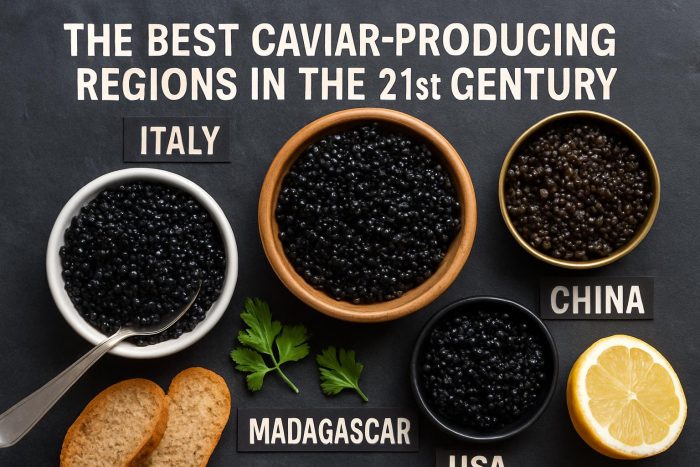
1. Italy: Known for its dedication to quality, Italy has become one of the world’s top producers. The Italian farms, located predominantly in the Po River, benefit from advanced aquaculture technology.
2. France: With a strong culinary tradition, France has embraced caviar production, especially in areas like Aquitaine, where local producers focus on sustainable practices and quality products.
North American Contributions
North America has also emerged as a significant player in the global caviar market. Canadian and American producers have honed their techniques to compete on the international stage.
1. United States: California and Florida are leading states in the U.S., with innovative methods for farming sturgeon in controlled environments. This has allowed them to produce high-grade caviar in sufficient quantities.
2. Canada: Known for its pristine waters, Canada offers an excellent environment for caviar production. Producers here focus on both quality and sustainability, making Canada a respected name in the industry.
Asian Developments
Asia has not been left behind in the caviar boom. Countries like China have invested heavily in this sector, combining traditional techniques with modern aquaculture science.
1. China: China’s rapid growth in caviar production is notable. By leveraging large-scale aquaculture farms, China has become one of the largest producers globally, offering a range of caviar types to international markets.
The Future of Caviar Production
As technology advances and environmental considerations become central to luxury food production, these regions continue to innovate. The focus remains on quality, sustainability, and expanding the palates of consumers worldwide. For further exploration into each region’s impact on the industry, more detailed resources are available on specialized food industry websites.
Conclusion: The 21st century has democratized caviar production, moving it beyond the historic confines of the Caspian Sea. This shift not only makes caviar more accessible but also ensures that traditional ecosystems are preserved for future generations.
