
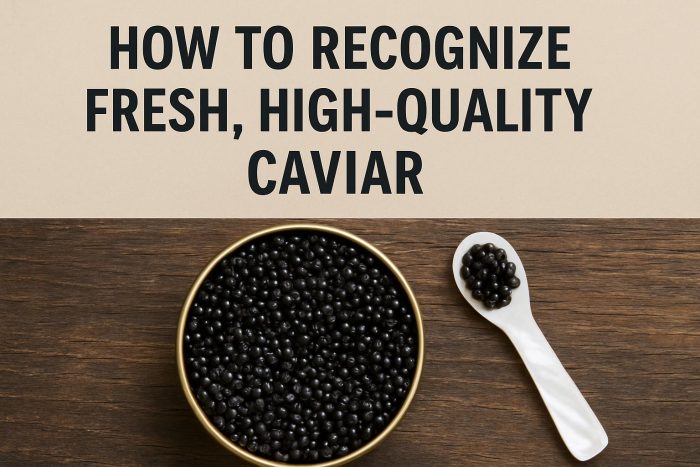
Understanding Caviar
Caviar, often associated with luxury, is derived from the roe of sturgeon species. Its quality can vary, making it essential to know how to distinguish fresh and high-quality varieties. Understanding the nuances of caviar can greatly enhance your culinary experiences.
Indicators of Freshness
Color and Appearance
One of the first indicators of caviar’s quality is its color. High-quality caviar typically has a lustrous sheen with uniformity in color. Depending on the type, this might range from pale silver-gray to deep black. The appearance should be vibrant, without any dull or cloudy textures.
Aroma
Fresh caviar should have a subtle, briny aroma reminiscent of the ocean. It should not smell fishy or off-putting. If the scent is overly strong or unpleasant, this could indicate spoilage or inferior quality.
Texture
Quality caviar should feel firm to the touch, with a slight pop when eaten. The eggs should be distinct and separate, not mushy or overly sticky. The texture is an essential factor in determining the freshness and quality, offering a delicate experience that dissolves smoothly on the palate.
Taste Profile
The flavor of high-quality caviar should be complex and buttery, with a subtle salinity that enhances its natural taste. It should not overwhelm the senses with saltiness or taste excessively fishy. A refined flavor indicates both freshness and quality.
Packaging Considerations
Proper packaging is vital for maintaining the quality and freshness of caviar. Look for vacuum-sealed containers or tins with tight seals. The packaging itself should show no signs of damage or leakage. Always verify the expiration date and storage guidelines provided by the producer.
Reliable Sources
Purchasing caviar from reputable sources is key. Look for purveyors who specialize in fine foods and have positive reviews or accreditations. If possible, consider visiting a store in person to assess the quality directly. It’s also beneficial to inquire about the sourcing practices and the specific sturgeon species from which the caviar is derived.
Further Information
For more insights on enjoying and selecting caviar, several online resources provide expert advice. Delving deeper into the world of caviar can enrich your appreciation and ensure a premium dining experience.
Conclusion
Recognizing fresh, high-quality caviar requires an understanding of its physical and sensory attributes. By focusing on color, aroma, texture, taste, and reliable sourcing, you can ensure a superior product. Whether you are a novice or a seasoned aficionado, these guidelines will help you make informed choices that highlight the best of what caviar has to offer.
